

What Is a Quality-of-Life Assessment for Pets?
There’s one question almost every family eventually whispers:
“How do I know if my pet is still okay?”
Not “How long do they have?”
Not “What’s the diagnosis?”
But something softer and harder at the same time:
“Are they still enjoying life?”
A Quality-of-Life Assessment helps answer that question with clarity, not fear.
It’s not a test.
It’s not a score you pass or fail.
It’s a gentle tool that helps you understand your pet’s day-to-day experience — so decisions feel informed and loving instead of rushed and emotional.

What is a Quality-of-Life Assessment?
A Quality-of-Life Assessment is simply a structured way to look at how your pet is feeling and functioning over time.
Instead of relying on memory or one hard day, you track patterns.
Because memory can play tricks on us.
We remember the worst days more strongly.
Or we cling to one good moment and hope everything is fine.
Assessment helps you step back and see the whole picture.
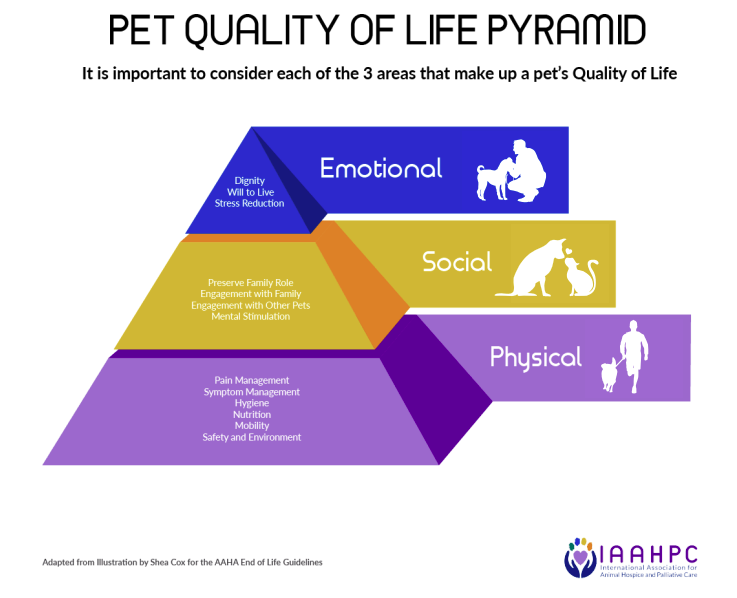
What does it measure?
Most assessments look at areas like:
Appetite
Hydration
Mobility
Pain or discomfort
Breathing
Hygiene
Energy
Interest in family
Good days vs. hard days
These aren’t medical numbers.
They’re real-life observations.
Is your dog still excited for dinner?
Does your cat still seek your lap?
Are they resting comfortably?
Sometimes these answers matter more than lab work.

Why it helps families so much
Without guidance, families often feel stuck between two fears:
“What if we wait too long?”
“What if we act too soon?”
A Quality-of-Life Assessment softens that tension.
Because you’re not guessing anymore.
You’re observing.
Tracking.
Understanding.
It transforms a heavy emotional decision into one grounded in both heart and clarity.
It’s not about “deciding the day”
This is important.
A Quality-of-Life Assessment doesn’t tell you when to say goodbye.
It helps you know when it’s time to talk about it.
Sometimes small adjustments improve comfort dramatically:
medication changes
better bedding
hydration support
mobility aids
Other times, you begin to see that your pet is working harder than they should be.
Either way, you’re responding with intention — not crisis.
